

The Complete 2026 Expert Guide
Vinyl flooring pros and cons are one of the most researched renovation topics in Australia in 2026. As homeowners look for flooring that balances durability, moisture resistance, comfort, and cost, vinyl flooring continues to attract attention across residential and investment properties.
Unlike earlier generations of vinyl, modern products now feature multi-layer construction, advanced wear layers, and high-definition surface textures that closely replicate natural timber and stone. However, despite these improvements, vinyl flooring still has limitations that must be carefully considered before installation.
This comprehensive guide provides a deep, unbiased analysis of the pros and cons of vinyl floors, including luxury vinyl flooring, performance expectations, long-term value, and suitability for Australian homes in 2026.
What Is Vinyl Flooring?
Vinyl flooring is a synthetic floor covering manufactured primarily from polyvinyl chloride (PVC). It is engineered in layers to enhance durability, stability, and visual appeal. Modern vinyl flooring systems typically consist of:
- A transparent wear layer that resists scratches and stains
- A printed design layer that creates timber or stone visuals
- A core layer (flexible, SPC, or WPC) that provides strength
- A backing layer that improves stability and sound absorption
In 2026, vinyl flooring is available in several formats, including sheet vinyl, vinyl planks, vinyl tiles, and rigid-core luxury vinyl systems.

Vinyl Flooring Pros and Cons Overview
Before analysing performance in detail, it is helpful to understand the overall strengths and weaknesses of vinyl flooring.
| Category | Vinyl Flooring Performance |
|---|---|
| Water Resistance | Fully waterproof, suitable for wet areas |
| Comfort | Soft and warm underfoot |
| Durability | Moderate to high depending on wear layer |
| Maintenance | Very low maintenance |
| Resale Value | Lower than timber or stone flooring |
Advantages of Vinyl Flooring in 2026
1. Waterproof and Moisture Resistant
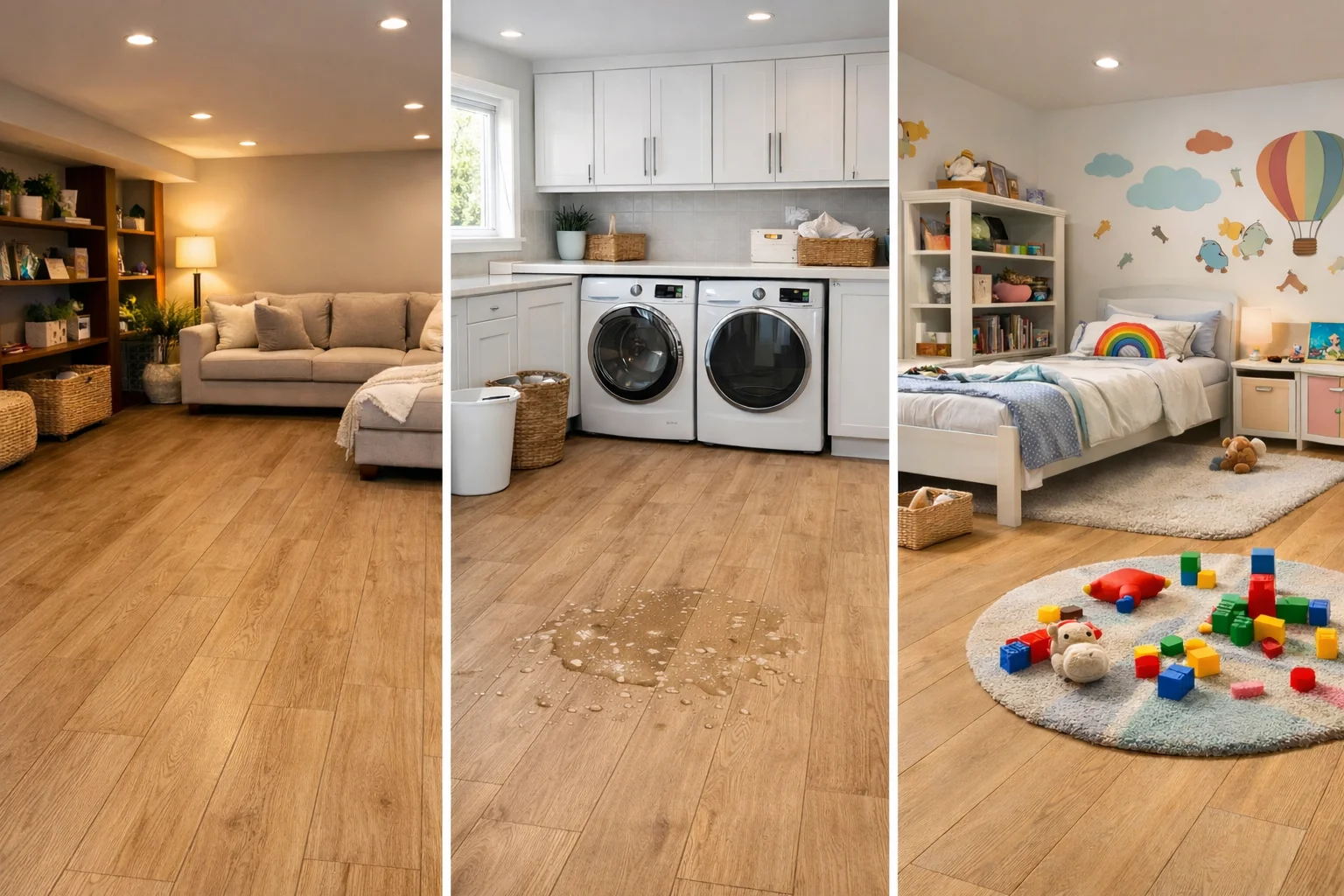
One of the most significant vinyl flooring pros in 2026 is its waterproof construction. Unlike timber or laminate, vinyl does not absorb moisture, swell, or warp when exposed to water. This makes vinyl flooring particularly suitable for kitchens, bathrooms, laundries, basements, and homes in humid Australian climates.
2. Cost-Effective Flooring Solution
Vinyl flooring remains one of the most affordable hard flooring options in Australia. Both material and installation costs are significantly lower than tiles or hardwood.
- Standard vinyl flooring: $25–$45 per m²
- Luxury vinyl flooring: $45–$85 per m²
- Installation: $35–$60 per m²
3. Comfortable and Quiet Underfoot
Vinyl flooring provides a softer walking surface compared to tiles or stone. Many 2026 vinyl products include built-in acoustic backing, reducing footstep noise and improving comfort in apartments and multi-storey homes.
4. Easy Maintenance and Cleaning
Vinyl flooring requires minimal maintenance. Regular sweeping and occasional damp mopping are usually sufficient. There is no need for sealing, polishing, or refinishing.
5. Design Versatility
Modern vinyl flooring can replicate a wide range of materials, including Australian timber species, concrete, terrazzo, and stone. Embossed-in-register textures enhance realism in premium products.
Disadvantages of Vinyl Flooring
1. Lower Resale and Prestige Value
Despite its performance, vinyl flooring does not carry the same prestige as natural timber or stone. Homes with vinyl flooring may not achieve the same resale premiums.
2. Sunlight and UV Sensitivity
Prolonged exposure to direct sunlight can cause fading or colour changes. UV-resistant coatings have improved in 2026, but north-facing rooms remain a risk.
3. Repair Limitations
Vinyl flooring is difficult to repair once damaged. Cuts, burns, or deep scratches often require replacing entire sections, particularly for glued-down installations.
4. Environmental Impact
Vinyl flooring is synthetic and non-biodegradable. Although recycling programs are improving, vinyl remains less environmentally friendly than timber or bamboo flooring.
Professional Pros and Cons Table
| Pros of Vinyl Flooring | Cons of Vinyl Flooring |
|---|---|
| 100% waterproof construction | Lower resale appeal than timber |
| Affordable material and installation costs | Can fade under strong sunlight |
| Comfortable and warm underfoot | Difficult to repair when damaged |
| Low maintenance requirements | Synthetic, non-biodegradable material |
| Wide range of designs and styles | Does not match real timber prestige |
Pro’s & Cons of Luxury Vinyl Flooring
Luxury vinyl flooring (LVP and LVT) offers improved performance compared to standard vinyl.
Luxury Vinyl Flooring Advantages
- Thicker wear layers (0.5–0.7mm)
- Improved durability and scratch resistance
- More realistic timber and stone visuals
- Longer lifespan (15–25 years)
Luxury Vinyl Flooring Disadvantages
- Higher upfront cost
- Installation quality is critical
- Still not equal to real hardwood
Vinyl Flooring Lifespan in 2026
The expected lifespan of vinyl flooring depends on quality, traffic levels, and maintenance:
- Budget vinyl: 8–12 years
- Mid-range vinyl: 12–18 years
- Luxury vinyl: 15–25 years
Is Vinyl Flooring Good for Australian Homes?
Vinyl flooring is an excellent option for Australian households seeking waterproof performance, affordability, and ease of maintenance. It is especially suitable for families, rental properties, and high-traffic areas. However, homeowners focused on long-term resale value or luxury aesthetics may prefer engineered timber or stone flooring.
Final Verdict: Vinyl Flooring Pros and Cons
When evaluating vinyl flooring pros and cons in 2026, vinyl stands out as a practical, durable, and cost-effective flooring solution for Australian homes. It delivers outstanding moisture resistance, comfort, and design flexibility. However, its limitations in prestige, repairability, and sustainability should be considered carefully. To explore modern vinyl flooring ranges, visit One Stop Vinyl or learn more about Australian-made performance flooring from Belgotex Australia.
Frequently Asked Questions
Is vinyl flooring waterproof?
Yes. Most vinyl flooring products in 2026 are fully waterproof and suitable for wet areas.
What are the biggest disadvantages of vinyl flooring?
The main drawbacks include lower resale value, sunlight sensitivity, and limited repair options.
How long does vinyl flooring last?
Vinyl flooring typically lasts between 10 and 25 years depending on quality.
Is luxury vinyl flooring worth the extra cost?
Yes. Luxury vinyl offers better durability, visuals, and lifespan compared to standard vinyl.
Is vinyl flooring suitable for pets?
Yes. Vinyl flooring is scratch-resistant, waterproof, and easy to clean, making it pet-friendly.