
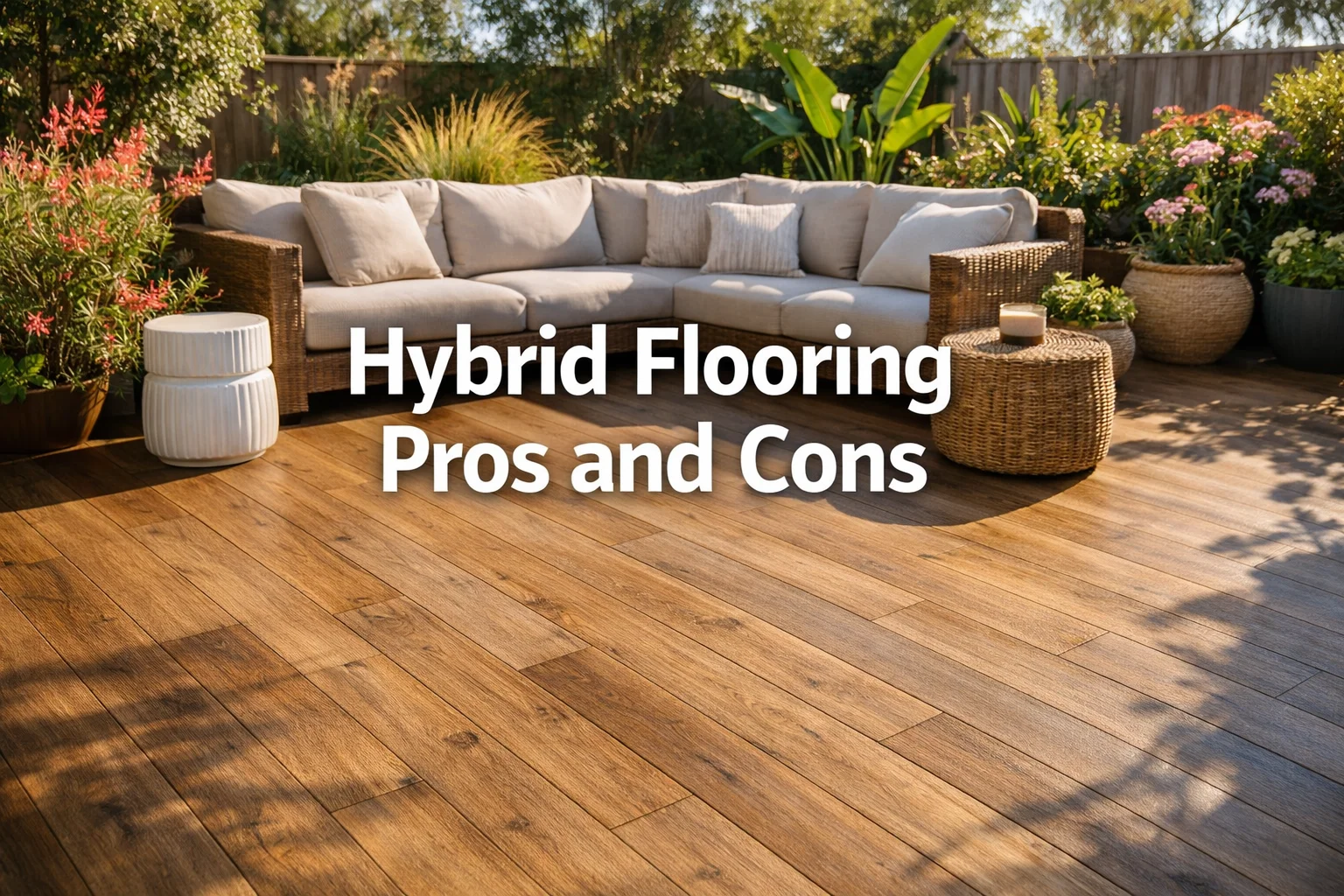
Hybrid flooring pros and cons are now one of the most researched renovation topics across Australia. In 2026, homeowners are no longer choosing floors based on appearance alone. Instead, durability, waterproof performance, acoustic comfort, and long-term value have become critical decision factors.
Hybrid flooring has rapidly moved from a “new alternative” to a mainstream flooring solution used in houses, apartments, townhouses, and investment properties nationwide. However, despite its popularity, many Australians still ask the same question: is hybrid flooring good, or does it come with hidden drawbacks?
This in-depth expert guide explains the real hybrid flooring pros and cons, explores types and applications, and helps you confidently decide whether hybrid flooring is the right choice for your home in 2026.
What Is Hybrid Flooring?
Hybrid flooring is a modern rigid flooring system that combines the best features of laminate flooring and vinyl flooring into one advanced product. It is engineered to handle moisture, temperature fluctuations, and heavy foot traffic—conditions commonly found in Australian homes.
Most hybrid flooring planks consist of the following layers:
- A UV-coated protective wear layer
- A high-definition decorative layer that mimics timber or stone
- A rigid waterproof core (SPC or WPC)
- An integrated acoustic underlay (common in 2026 ranges)
This layered construction explains why hybrid flooring pros and cons differ significantly from traditional laminate or vinyl flooring.

Is Hybrid Flooring Good for Australian Homes?
Yes—hybrid flooring is good for Australian homes, particularly when durability and water resistance are essential. Australia’s housing conditions create unique flooring challenges, including:
- Concrete slab construction
- Seasonal temperature changes
- Indoor–outdoor living layouts
- High moisture exposure in kitchens and laundries
Hybrid flooring is specifically designed to perform well under these conditions. However, understanding both advantages and disadvantages is crucial before purchasing.
Hybrid Flooring Pros (2026 Updated Benefits)
1. True Waterproof Performance
One of the strongest hybrid flooring pros is its waterproof core. Unlike traditional laminate, hybrid flooring does not swell or warp when exposed to moisture.
- Safe for kitchens, laundries, and entryways
- Handles spills, pet accidents, and humidity
- Ideal for open-plan Australian homes
2. Excellent Structural Stability
Hybrid flooring performs exceptionally well under temperature fluctuations. In 2026, improved core technology has further reduced expansion and contraction.
- Suitable for large open spaces
- Minimal movement compared to laminate
- Reliable performance in warm climates
3. High Durability and Wear Resistance
Modern hybrid floors now feature thicker wear layers, making them suitable for busy households.
- Scratch and scuff resistance
- Withstands furniture movement
- Ideal for families and pets
4. Realistic Timber and Stone Designs
Advancements in digital printing and embossing technology have dramatically improved aesthetics.
- Natural timber grain textures
- Wide plank and matte finishes
- Modern colour palettes for 2026 interiors
5. Easy Installation and Renovation Friendly
Hybrid flooring uses a floating click-lock system, making it highly renovation-friendly.
- Faster installation times
- Lower labour costs
- Can be installed over existing floors
Hybrid Flooring Pros Table
| Advantage | Why It Matters |
|---|---|
| Waterproof core | Perfect for wet areas and spills |
| High durability | Handles heavy foot traffic |
| Thermal stability | Suitable for Australian climate |
| Easy installation | Reduced renovation downtime |
| Low maintenance | No sanding or sealing required |
Hybrid Flooring Cons (Disadvantages to Consider)
1. Harder Underfoot Than Timber
Despite built-in underlay, hybrid flooring feels firmer than engineered or solid timber.
- Less natural cushioning
- May feel rigid in living areas
- Rugs often used for added comfort
2. Acoustic Sensitivity in Apartments
Sound transmission can be an issue if incorrect underlay or installation methods are used.
- Must meet strata acoustic requirements
- Professional installation recommended
- Quality varies by brand
3. Limited Repair and Refinishing Options
Hybrid flooring cannot be sanded or refinished like timber floors.
- Damaged planks may require replacement
- Repairs are more complex than vinyl
Hybrid Flooring Cons Table
| Limitation | Impact |
|---|---|
| Hard surface | Less comfort than timber |
| Acoustic dependency | Installation quality is critical |
| No refinishing | Cannot be restored like timber |
| Quality variation | Cheap products underperform |
Types of Hybrid Flooring in 2026
SPC Hybrid Flooring (Stone Plastic Composite)
The most common type in Australia, SPC hybrid flooring is extremely rigid and waterproof.
WPC Hybrid Flooring (Wood Plastic Composite)
WPC hybrid flooring offers slightly more comfort underfoot and improved acoustic properties but comes at a higher cost.
Hybrid Flooring Applications
- Living rooms
- Kitchens and laundries
- Bedrooms and hallways
- Apartments and investment properties
- Retail and office spaces
This versatility is a key reason hybrid flooring dominates Australian flooring trends in 2026.
Hybrid Flooring Cost Considerations in Australia
Hybrid flooring generally offers excellent value compared to timber flooring. Pricing depends on thickness, wear layer, and brand quality. Higher-quality products typically deliver better acoustic performance and longer lifespan.
Environmental and Health Factors
In 2026, reputable hybrid flooring brands comply with strict Australian standards.
- Low-VOC emissions
- Formaldehyde-free construction
- Safe for families and pets
Final Verdict: Hybrid Flooring Pros and Cons Explained
When carefully evaluating hybrid flooring pros and cons, it becomes clear why this flooring type continues to dominate Australian homes in 2026.
Hybrid flooring delivers outstanding waterproof protection, durability, and modern design at a competitive price point. While it lacks the refinishing ability of timber and feels firmer underfoot, its performance advantages make it an excellent choice for most households.
If you are seeking a reliable, low-maintenance, and future-proof flooring solution, hybrid flooring remains one of the smartest investments available.
Explore hybrid flooring options at One Stop Floors.
For additional technical insights and manufacturer guidance, visit Preference Floors and Hy Flooring.
Frequently Asked Questions
Is hybrid flooring good for kitchens?
Yes. Hybrid flooring is fully waterproof and suitable for kitchens, laundries, and other moisture-prone areas.
What are the biggest disadvantages of hybrid flooring?
The main drawbacks include firmness underfoot, limited repair options, and acoustic sensitivity if poorly installed.
How long does hybrid flooring last?
High-quality hybrid flooring typically lasts 15–25 years with correct installation and care.
Is hybrid flooring better than laminate?
In most cases, yes. Hybrid flooring offers superior waterproofing, stability, and durability.