

Herringbone vs Chevron Flooring
This is one of the most frequently asked questions among Australian homeowners, builders, architects, and interior designers in 2026 — and for good reason. Both flooring patterns are considered premium design choices, both originate from classic European craftsmanship, and both instantly elevate the look and value of a space. However, despite their similar zigzag appearance, herringbone and chevron flooring are not the same.
While each pattern delivers a strong architectural statement, the differences lie in how the boards are cut, how they are installed, and how they ultimately influence the feel of a room. These distinctions directly affect installation complexity, overall cost, design flexibility, and long-term maintenance. Choosing the wrong pattern for your layout or budget can lead to unnecessary expense or design compromises.
This comprehensive guide explains the difference between herringbone and chevron flooring in clear, practical, and up-to-date terms for 2026. You will learn how each pattern works, how they compare visually and structurally, which option suits different types of homes and interiors, and what to expect in terms of cost and performance in Australia. By the end, you will be able to confidently choose the right flooring pattern for your space, lifestyle, and long-term investment goals.

Herringbone vs Chevron Flooring Explained
At first glance, herringbone and chevron flooring appear similar because both create a zigzag-style pattern. However, the way each plank is cut and installed creates a very different final result.
- Herringbone flooring uses rectangular boards installed at 90-degree angles in a staggered pattern.
- Chevron flooring uses boards cut at an angle, typically 45 or 60 degrees, forming a continuous V shape.
Although the distinction seems subtle, it directly affects installation complexity, pricing, and long-term maintenance.
What Is Herringbone Flooring?
Herringbone flooring is a classic parquet pattern with a long architectural history. It features straight-edged planks laid in an offset zigzag formation, creating movement and texture without perfect symmetry.
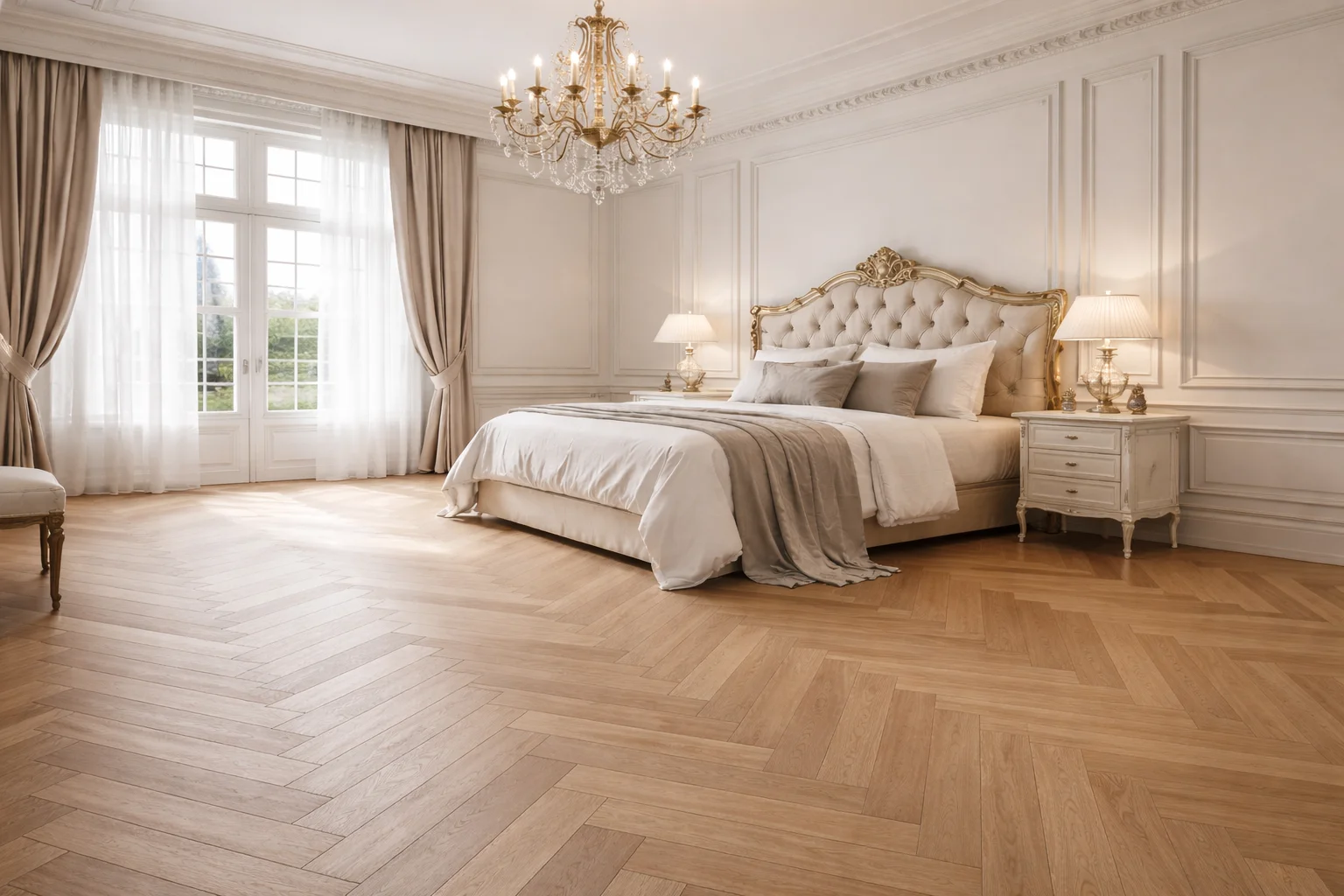
Key Features of Herringbone Flooring
- Rectangular boards with straight edges
- Timeless and versatile appearance
- Compatible with engineered timber, hybrid, laminate, and vinyl
- More forgiving installation process
- Suitable for both traditional and modern interiors
In Australia, herringbone flooring remains the most popular patterned timber flooring option due to its flexibility and balanced cost.
What Is Chevron Flooring?
Chevron flooring creates a precise and symmetrical pattern by using boards that are cut at an angle. Each plank meets perfectly at the centre, forming a sharp and continuous V shape.
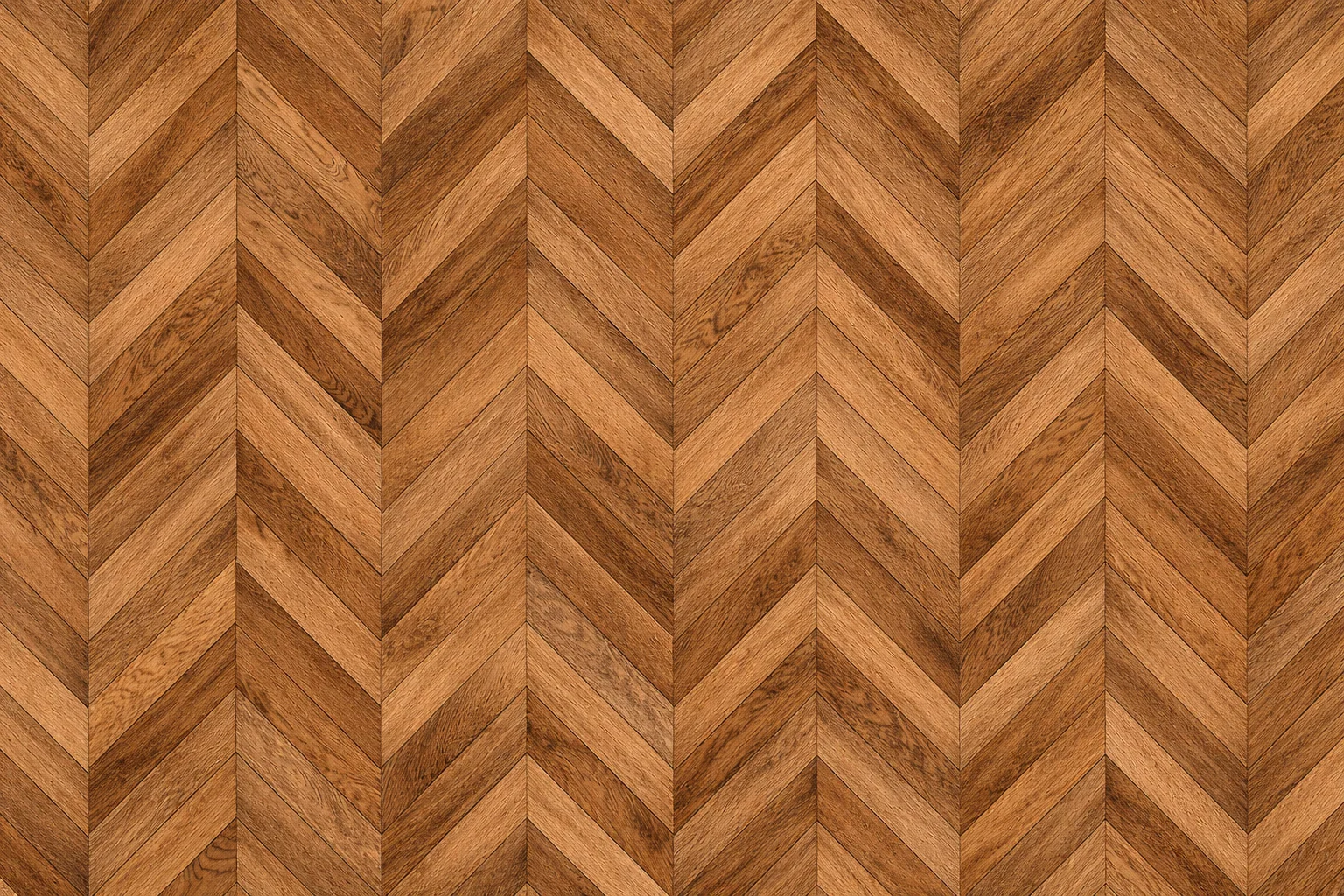
Key Features of Chevron Flooring
- Angled plank ends (45° or 60°)
- Highly symmetrical and refined appearance
- Strong visual impact in open-plan spaces
- Requires advanced installation expertise
- Higher material and labour costs
Chevron flooring is often chosen for high-end residential projects, luxury apartments, and statement interiors.
Herringbone vs Chevron Flooring: Design Comparison
| Design Factor | Herringbone Flooring | Chevron Flooring |
|---|---|---|
| Pattern style | Broken zigzag | Continuous V shape |
| Symmetry | Staggered | Perfectly aligned |
| Visual effect | Textured and dynamic | Sleek and structured |
| Interior style | Classic to transitional | Modern to luxury |
Installation & Technical Differences
| Installation Factor | Herringbone | Chevron |
|---|---|---|
| Board shape | Rectangular | Angled ends |
| Installation complexity | Moderate | High |
| Installation time | Faster | Slower |
| Error tolerance | Higher | Very low |
Cost Comparison in Australia (2026)
| Cost Aspect | Herringbone | Chevron |
|---|---|---|
| Material cost | Medium | High |
| Installation cost | Medium | Very high |
| Wastage | Moderate | Higher |
| Overall budget | More accessible | Premium |
Performance & Durability in 2026
From a durability perspective, the pattern itself does not affect performance. Instead, performance depends on the flooring material used, such as engineered timber or hybrid flooring.
Both herringbone and chevron flooring perform exceptionally well in Australian homes when manufactured with modern 2026 standards.
Which Flooring Should You Choose?
Choose Herringbone Flooring If:
- You want a timeless and flexible design
- Your space has corners or irregular layouts
- You prefer lower installation costs
- You want easier future repairs
Internal Link (Herringbone Range):
Herringbone Flooring Collection
Choose Chevron Flooring If:
- You want a bold architectural statement
- Your space is symmetrical and open
- Your budget allows for premium installation
- You want maximum visual impact
Interior Design Trends in 2026
In 2026, Australian design trends favor warm minimalism and refined classics. As a result:
- Herringbone flooring suits heritage homes and transitional interiors.
- Chevron flooring complements modern, luxury, and high-end designs.
Herringbone vs Chevron Flooring: Final Verdict
When comparing Herringbone vs Chevron Flooring: What’s the Difference? the answer lies in style, budget, and installation precision. Herringbone flooring offers timeless appeal and versatility, while chevron flooring delivers symmetry and luxury. Both are premium choices in 2026.
Internal Resource: Herringbone Flooring – One Stop Floors External Inspiration Resource: Create Timber Floor – Timber Flooring Inspiration
Frequently Asked Questions
Is herringbone flooring cheaper than chevron flooring?
Yes. Herringbone flooring is generally more affordable due to simpler board cuts, faster installation, and reduced labor costs.
Does chevron flooring make rooms look larger?
Yes. The continuous V pattern can visually elongate rooms, making narrow or long spaces feel larger.
Which flooring pattern is more popular in Australia?
Herringbone remains more popular overall, while chevron is increasingly used in luxury homes and apartments.
Can both patterns be installed with hybrid flooring?
Yes. In 2026, both herringbone and chevron patterns are available in engineered timber, hybrid, laminate, and vinyl formats.
Is chevron flooring harder to repair?
Yes. Due to angled cuts and precise alignment, chevron flooring repairs are more complex than herringbone.